Photos: Radio Classic FM
Host: Georgi Mitov-Gemi
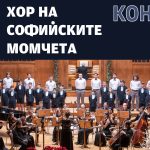
The Sofia Boys’ Choir Marks 55th Anniversary with a Lunchtime Concert on June 18
Interview by Georgi Mitov-Gemi with Prof. Adriana Blagoeva, Conductor of the Sofia Boys’ Choir, June 15, 2023
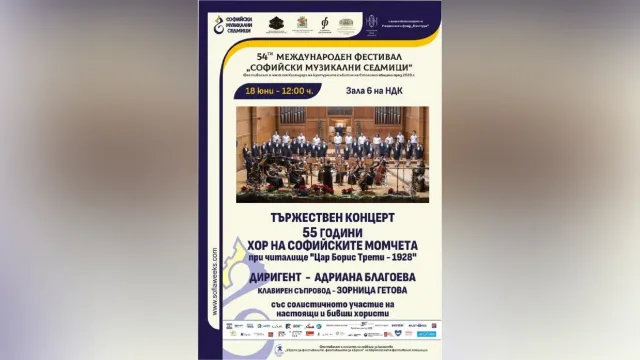
On Sunday, June 18, at 12:00 PM in Hall 6 of the National Palace of Culture, a concert will be held to celebrate the 55th anniversary of the Sofia Boys’ Choir at the “Tsar Boris III – 1928” Community Centre. The event is part of the 54th International Festival “Sofia Music Weeks,” organizers announced.
The ensemble will perform both beloved choral pieces and new works under the direction of Adriana Blagoeva.
The concert program will feature current and former choir members as soloists. The piano accompaniment will be performed by Zornitsa Getova.
Tickets are available at the NPC box office.
Read the full article here.
Interview by Georgi Mitov-Gemi with Prof. A. Blagoeva, Classic FM, June 15, 2023
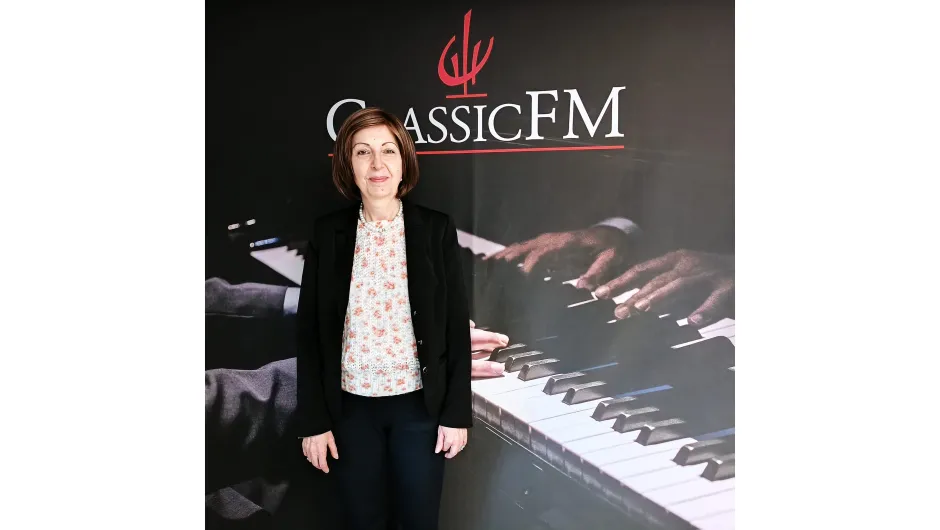
Dear listeners, this Sunday, June 18, in Hall 6 of the National Palace of Culture, the 55th anniversary of the Sofia Boys’ Choir at the “Tsar Boris III – 1928” Community Centre will be celebrated. To tell us about the choir’s history, its wonderful concert moments, and new projects, we are joined by the conductor, Professor Adriana Blagoeva. Welcome!
Good afternoon! I’m very happy to be here with you!
Me too, and even more so, especially since you are returning from intriguing Iceland, because the choir, of course, continues its musical activities beyond our country, not just in Bulgaria. Tell us a bit more about your experience in northern Europe.
This was an extraordinary experience that we were fortunate to undertake as part of the “The Boys Are Singing” International Choir Festival, whose first edition took place in Sofia last October. The second edition of this festival was held in Iceland, and our ensemble had the rare opportunity to visit this fascinating, very different country. We were able to see incredible natural landmarks and at the same time perform concerts for a very warm and curious audience.
Together with your partner choir, the boys’ choir from Reykjavik. What pieces did you perform, and how did you surprise them?
One part of our program consisted of Bulgarian songs, which is traditional whenever our ensemble presents its artistic work to a foreign audience. The second part included a more diverse selection, ranging from Renaissance and Baroque pieces to contemporary music. Interestingly, we also had four joint performances with the Icelandic choir. Two of these were the festival’s required pieces: the festival anthem “Vivalya Musika” and a special song composed by Stefan Valdobrev for the festival, titled “The Boys Are Singing,” after the festival itself. Additionally, the two choirs performed one Bulgarian and one Icelandic song together, which the audience greatly enjoyed. I believe this was one reason for the strong interest in the concerts of both ensembles during this international choir festival.
What is the atmosphere in Iceland? How does the audience respond? Is there interest in classical music, in choral performances? Do you notice a kind of cultural movement there, or is it generally quieter? Also, I imagine the weather posed a challenge for you.
Yes, indeed. We didn’t have the best luck with the weather, as it was quite cold—around 10 degrees Celsius—with strong winds and occasional rain, so it wasn’t particularly welcoming. Despite this, we managed to see some truly remarkable natural landmarks. Iceland is essentially a volcanic island, and the landscape is extremely unique, with cold tones dominating: lots of grey, black, and dark green, and very little natural vegetation. Nevertheless, Icelanders have established a high standard of living, which is impressive to any visitor.
Regarding our musical experiences, I’d like to mention that we first met the Reykjavik boys’ choir in Sofia last October, and this was our second encounter. We noticed, and some audience members also noted, that their musical development had progressed since their participation in our first festival, which is very important. The purpose of the project, in collaboration with the Sofia Boys’ Choir, was exactly this: an exchange of musical knowledge, experience, and creative ideas between ensembles from different parts of Europe. The Icelandic boys’ choir is the only boys’ choir in their country, and it was very rewarding to see that their level had increased by the second edition of the festival.
Of course, we also tried to showcase higher-quality and more varied repertoire to the Icelandic audience. I believe this collaboration between the two ensembles produced very positive artistic results.
In what kind of venue did you perform?
All three concerts were held in churches—one in Reykjavik and two in smaller towns. This was intentional, as the project aims to bring culture not only to major urban centers but also to smaller communities. The churches provided excellent acoustics, good attendance, and an emotional atmosphere, especially during joint performances. We hope the Bulgarian boys felt wonderful during this visit, learning about a very different country and immersing themselves in its atmosphere and unique characteristics.
It must have been fascinating and very different from most European countries. Now, let’s return to Bulgaria, and specifically to this Sunday, June 18, Hall 6 at NPC, to celebrate 55 years of the Sofia Boys’ Choir. Can we go back and recall how the choir was founded?
Yes, 55 years means many generations of musicians have passed through it. The choir was established in 1968, with the first conductor being Ms. Liliana Todorova at the community centre, which still supports the choir today. At first, it functioned as a local ensemble, drawing children only from the school in that district—Kularovski district. I began working with the choir in 1989 as conductor when Ms. Todorova retired, which was a huge responsibility because the choir already had strong musical qualities, and taking over after someone who led it for 20 years was a major challenge.
I also expanded the choir’s reach, gathering children from almost all over Sofia, which led us to rename it the Sofia Boys’ Choir. Later, in 1997, a youth formation was created for former choristers who had grown up and wanted to continue singing. This gave the choir the structure common in Western European boys’ choirs: a boys’ choir, a youth choir, and a mixed choir, allowing for a wider repertoire and performance opportunities.
Have there been periods when the number of new boys joining fluctuated?
Yes, it has varied. Until the end of the 20th century, there were generally more candidates. From around 2000 to 2010, the number of boys decreased, affecting both the boys’ and youth ensembles. In the last two to three years, the numbers have been increasing again. Of course, the pandemic also affected recruitment, as we could not actively enroll new choristers during that period. This concert season is the first full active season after the pandemic.
Who will perform at the June 18 concert?
Both current and former choristers will participate, showcasing their development over the years. Former members remain part of the Sofia Boys’ Choir family, and the audience appreciates that the choir has become a benchmark for high-quality performance and artistic style.
What will the program include?
We will present some songs that have been favorites over the choir’s history, as well as several new pieces for our audience. These include Giovanni Battista Martini’s “Song of Laughter,” a gem from Italian Renaissance music; Karl Jenkins’ “Di Eimos,” adapted for our choir; works by Philip Koutev such as “Vecherja i Rado”; compositions by Petar Leondv; and some classical children’s songs. Additionally, some current choristers will showcase instrumental skills, and former choristers who are now pop performers—Yasen Zerdev, Dragomir Dragiev, and Viktori Breshimov—will also appear, adding a special touch to the concert.
Dear listeners, join us in Hall 6 at the National Palace of Culture at 12:00 PM this Sunday, June 18, for a delightful afternoon with the Sofia Boys’ Choir under the direction of Adriana Blagoeva.
It has been a great pleasure having you here, Professor Blagoeva. We wish you continued success and creative projects, and may the choir continue its work for many more years.
Thank you very much!
Professor Adriana Blagoeva is our guest today. Be sure to attend the concert as part of the 54th edition of the Sofia Music Weeks festival—tickets are on sale.