PROF. DR. ADRIANA BLAGOEVA:
“Choral Art Shapes Character”
By Viliana Semerdzhieva, Duma Newspaper, 22 December 2015
For Prof. Dr. Adriana Blagoeva, conducting the Choir of Sofia Boys is more than music—it is a form of education that nurtures both the spirit and character of young singers.
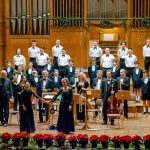
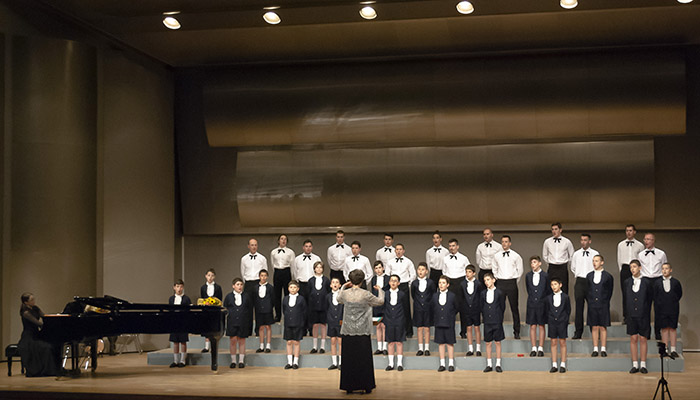
Founded in 1968, the Choir of Sofia Boys is Bulgaria’s first boys’ choir. Its members, aged 8 to 15, come from various schools across the capital. Since 1989, Prof. Blagoeva has led the choir, and in 1997 she established a youth formation, bringing together former members of the boys’ choir. Together and separately, these two ensembles perform in concerts, collaborate with orchestras, soloists, and other choirs, and appear in opera and musical productions. Internationally acclaimed, the choir has won prestigious awards, toured extensively, and released nine solo CDs.
This year, the choir will celebrate its 27th traditional Christmas concert on 25 December at 6 p.m. in Sofia’s “Bulgaria” Hall.
What can audiences expect from this year’s Christmas concert?
– We’ll perform alongside soloists from the Sofia Philharmonic, presenting Christmas songs from around the world. Bulgarian carols will also feature prominently, including several world premieres of arrangements by Stoyan Babekov and Petar Krumov. This continues our tradition of showcasing Bulgarian carols on stage.
Will there be surprises even for long-time concertgoers?
– Absolutely. We aim to introduce fresh works in every concert. Special guests include guitarist Rosen Balkanski and tenor Nikolay Motsov, with piano accompaniment by Zornitsa Getova and organ accompaniment by Prof. Atanas Atanasov.
Which formation of the choir will take the stage?
– This time, the mixed ensemble of boys and youth will be the focus.
2015 has been a remarkable year internationally. Which events stood out most?
– Our concert tour in Japan in May and June was a true highlight. The program was diverse: the first part featured Bulgarian music, and the second included contemporary choral works and pieces spanning from Renaissance to Romanticism. We even performed several Japanese songs and had the privilege of singing with local children’s and youth choirs. The organizers, especially the “Japan-Bulgaria” association, were highly impressed, and most concerts were sold out.
In July, we were honored as special guests at the All-Turkish Choral Festival in Çanakkale. There is no comparable children’s choir in Turkey, so we were met with warmth and curiosity, and we gained many new friends and admirers.
Earlier this season, we participated in the Days of Japanese Culture in Bulgaria, another artistic high point. After the concert, Japan’s ambassador to Bulgaria, H.E. Takashi Koizumi, personally congratulated us. Indeed, 2015 has been a year full of artistic challenges, which our choir has met successfully.
How do you manage international tours? Do you have sponsors?
– Financing the arts has never been easy. For each event, we seek support from patrons, though not always successfully. We rely heavily on the parents of our singers—their financial and moral support is invaluable.
The choir is based at the Sofia community center “Tsar Boris III – 1928.” What does it provide?
– It gives us a home where we can create freely and without distractions.
Working with boys as young as eight, how do you maintain their focus and motivation?
– I strive to spark their curiosity and love for music. Achieving excellence requires consistency, discipline, and a serious approach—qualities we cultivate gradually from an early age.
Have children changed since you began leading the choir 27 years ago?
– Yes. Attitudes toward choral music have shifted. Until the late 20th century, choral art enjoyed widespread recognition for its educational and cultural value. Today’s children grow up in an environment that doesn’t always foster spiritual development. Many parents are grateful that our choir provides their children with fulfillment and helps build their character and musical culture.
Extracurricular arts programs have declined in schools. How does this affect young musicians?
– Opportunities for extracurricular activities are limited today, unlike in the past when they were integral to education. Yet I remain hopeful that schools will increasingly recognize the importance of fostering creativity and teamwork through such programs.
What is the value of participating in international choral festivals?
– Festivals provide exposure, a chance to present artistic work to broad audiences, and opportunities for professional collaboration and benchmarking. Bulgaria hosts many festivals, competitions, and reviews, especially in the provinces, and greater publicity could further elevate public interest.
Do students still choose choral conducting as a profession?
– Yes, there is interest. Though fewer than in the past, talented students exist, and we encourage them to contribute to the preservation and development of Bulgaria’s choral culture.
What lies ahead for the Choir of Sofia Boys in 2016?
– We have important engagements planned. In spring, we will perform at the European Music Festival with the singer Ina Kuncheva and at the Easter Festival organized by Classic FM Radio and “Cantus Firmus.” For both events, we are preparing new programs, featuring lesser-known works from the Classical repertoire.