This is how the world, rich in tradition, presents itself—a world to be discovered and admired.
Elena Franceschini
BOLZANO. A competition acts as a prism, refracting and condensing. Listening all day to a diverse selection of competitors reveals to the audience a spectrum of nuances and contrasts. It highlights intentions and exposes differences.
This diversity and abundance were put to the test these days at the Haus der Kultur in Bolzano, during the European Folk Song Competition. Every participating choir presented its own distinct characteristics—a unique approach to interpreting a song and integrating it within the ensemble’s vocal capacities. It is an endless world revealing itself to us these days, and, as Armando Franceschini, Director of the Trento Conservatory and member of the jury, put it, “a world that inspires complete admiration. Generally, the choristers devote themselves with passion to this activity,” Franceschini continues, “reviving part of our musical tradition, and in performing it, they remind us of it.”
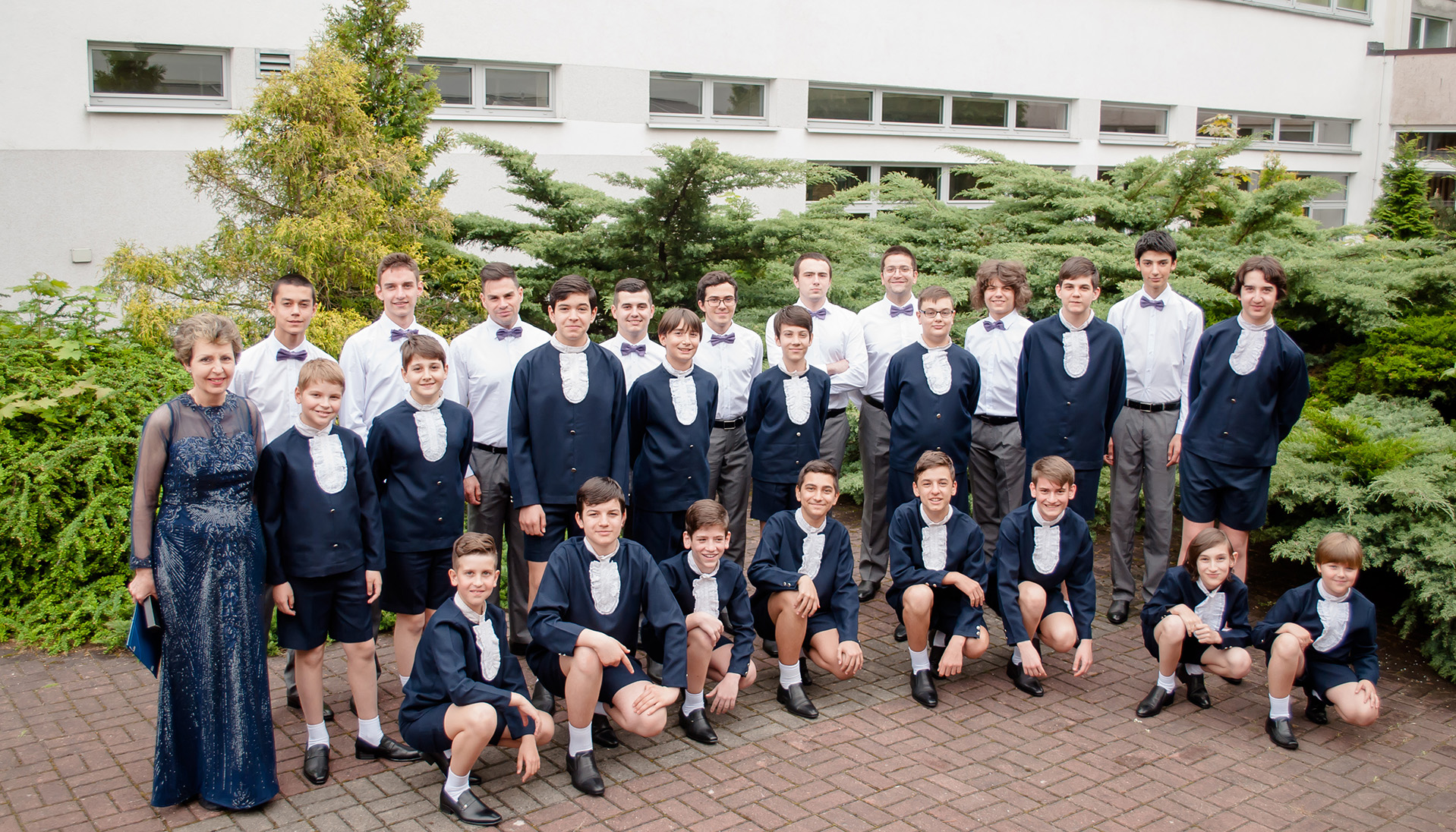
Regarding this musical showcase, the majority of folk repertoire came from Northern Italy. Choirs hailed from Treviso, Gorizia, Pordenone, Turin, and other regions. Exceptions included one Swiss, one Sardinian group, and several from farther afield, for example, Bulgaria. The Boys Choir—a group of young boys trained from an early age, supported by state subsidies—brought to the stage a breath of the powerful traditional culture that has always inhabited this part of Europe looking eastward.
Conducting them—remarkably, the second instance of this during the competition—was a woman: Adriana Blagoeva. Female leadership in a male choir is rare even in Eastern Europe, or at least so insists Blagoeva: “But when we reach this role, we are highly motivated in our work and fully dedicated to it.” And there is nothing humorous about it, as the boys from Sofia are brilliant on stage. They present themselves as experienced performers and are meticulous in conveying the nuances and character of each song. Regarding this expertise, Blagoeva offers her explanation: “This is the nature of our folklore. It is very rich and can easily accommodate different approaches to performance. Most of our songs speak of love or historical events. Above all, a light humor runs through them, and there is abundant wordplay. This is how we exist. Moreover, I must say that the boys care deeply about their presentation in this competition.” Other distant ensembles from the East included the Fraconian Choir from Riga, Latvia, and the Apz Tone Tom’sic Choir from Slovenia.
By the end of the first evening, anticipation grew in the hall for the Latvian choir from Vilnius, called Coro Sakalas. According to unofficial reports, they had sung for the soundtrack of the film The Hunt for Red October with Sean Connery, depicting military espionage. The claim was false, but it was rooted in a semblance of truth. The Sakalas Choir belongs to the Latvian Ministry of the Interior, and, in a way, it evoked the atmosphere of the Iron Curtain for us Western audience members. Moreover, Romas Makarevicius conducted his charges in full military uniform, in accordance with the traditions of their former empire. Enchanting!
“Our songs speak of love,” recounts Jones Monejus, a young member of the choir who taught himself Italian. “They are somewhat sad and restrained, as our people are restrained. They also describe historical moments and the suffering of our people under the Tsar.”